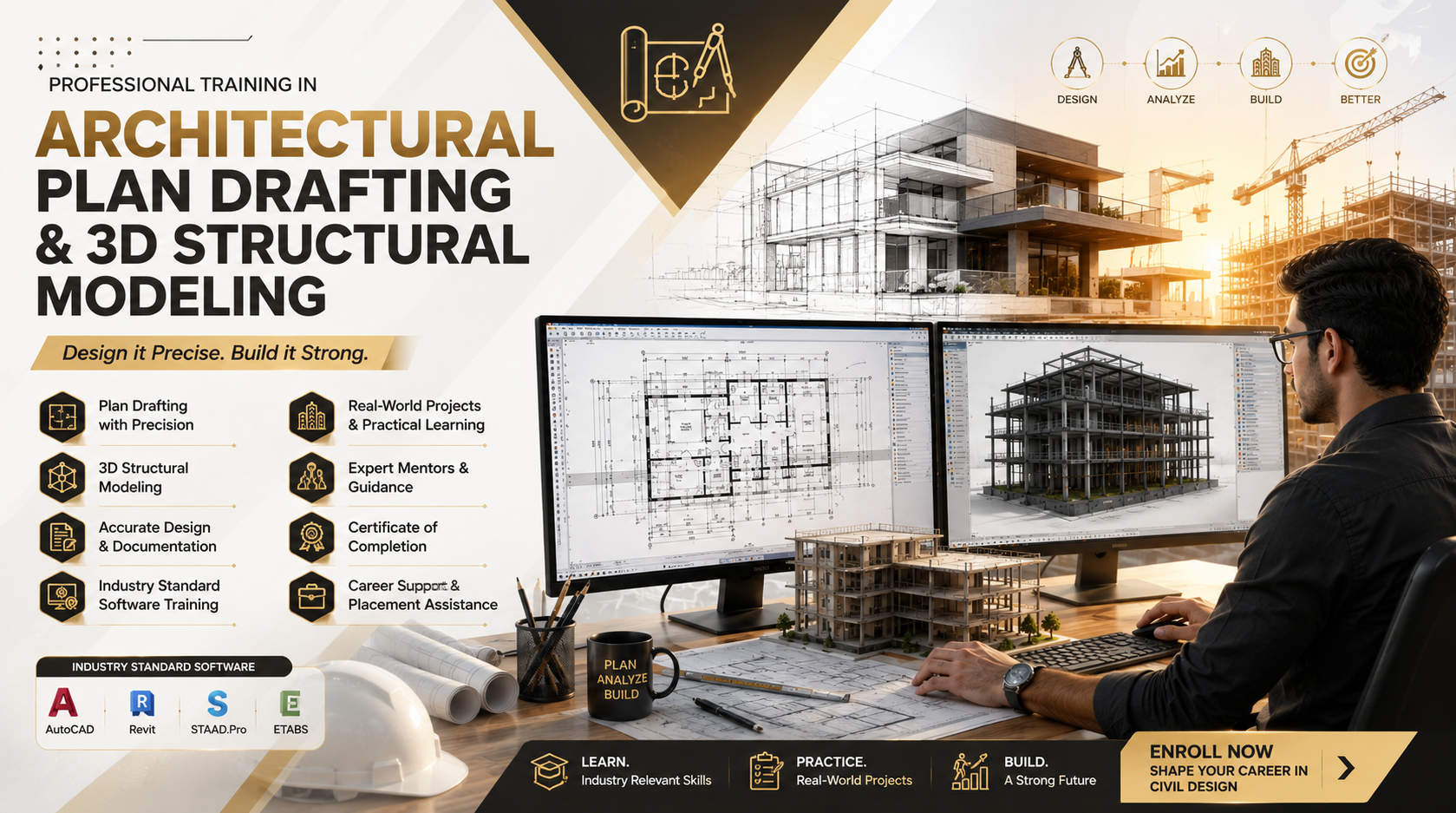
Transform your engineering fundamentals into industry-ready drafting and modeling skills. Master AutoCAD 2D/3D, Revit BIM, Staad Pro, and structural detailing to design modern infrastructure.
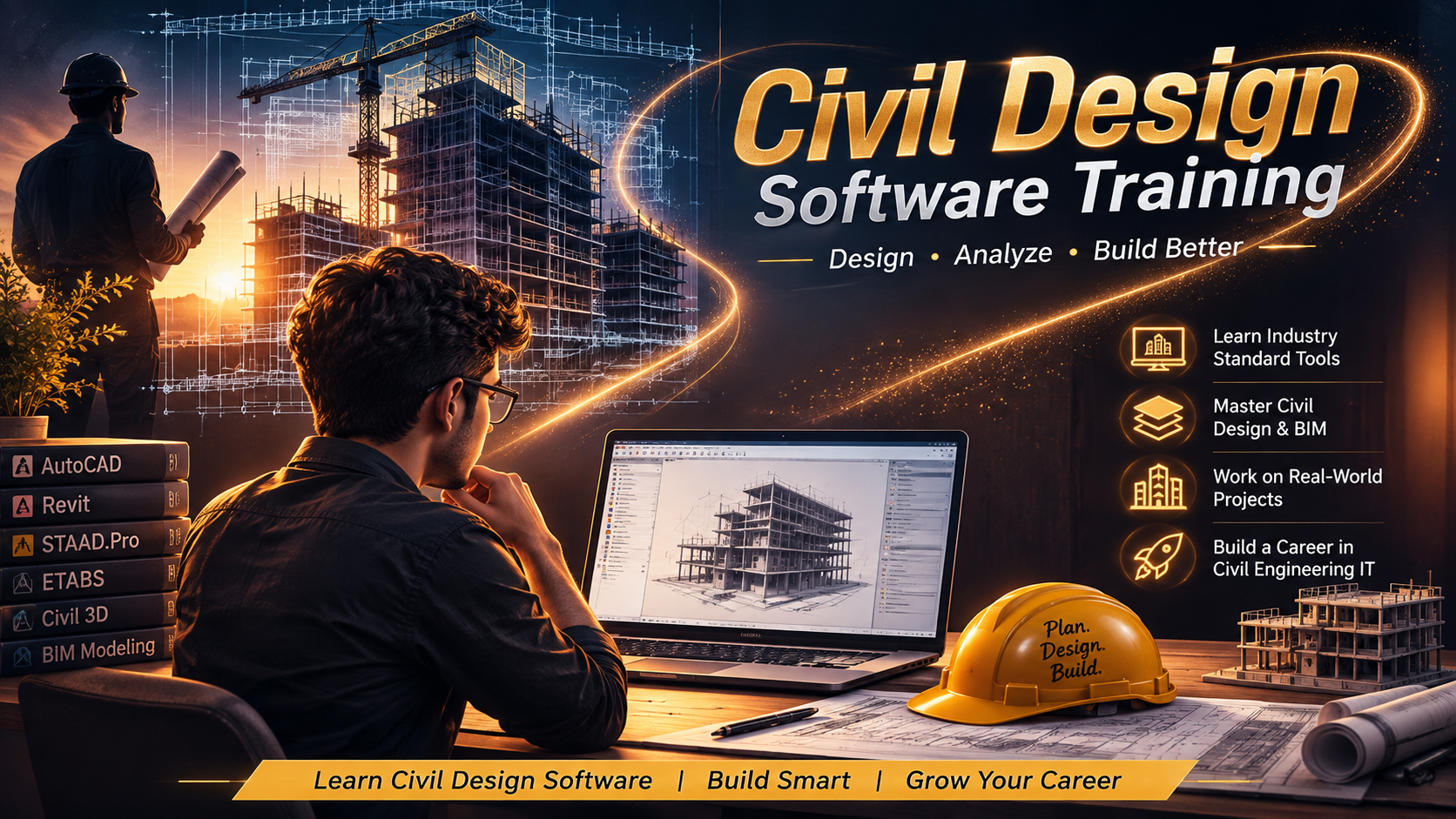
At DCICI, we bridge the gap between academic civil engineering theory and live construction drafting. Our Civil Design Software Training emphasizes accuracy, structural codes, and collaborative BIM workflows.
Master blueprint drafting, RCC/steel structural analysis, estimation sheets, architectural 3D modeling, and coordination matrices expected by top construction and infrastructure firms.
Where engineering concepts turn into real-world projects. DCICI delivers high-performance workstation labs, licensed software tools, and direct placement pipelines across leading EPC firms.
Explore structured skill modules designed for diploma holders, B.Tech/BE civil engineers, architects, and working professionals:
Architectural floor plans, elevation sections, municipal approval drawings, and structural rebar details.
Parametric 3D building modeling, clash detection, quantity takeoffs, and construction schedule documentation.
Dead/live load calculations, wind and seismic seismic load simulation, concrete beam-column design, and steel truss analysis.
Open doors to core structural design firms, government contractors, EPC giants, and international architectural studios.
Draft precision working plans, cross-sections, and municipal submission drawings.
Develop collaborative 3D BIM models, clash detection reports, and asset schedules.
Perform load analysis, frame design, and stability checks using Staad Pro and ETABS.
Calculate Bills of Quantities (BOQ), material estimation, and project costing schedules.
Render exterior elevations, 3D site walkthroughs, and realistic infrastructure layouts.
Coordinate site execution schedules, resource allocation, and workflow documentation.
This isn’t just software command practice — it is your gateway to real-world structural engineering. At DCICI, you will build live project portfolios, master industry codes (IS 456, IS 800), and collaborate with practicing civil engineers.